Lofoten is spectacular. It is also, in the summer months, absolutely heaving. The island you actually want is two hours further east, and almost nobody outside Norway knows it exists yet.
There is a photograph that appears on approximately every third travel piece about northern Norway. Jagged peaks, red and yellow rorbu cabins at the water's edge, a mirror-flat reflection. It is beautiful. It is also, if you arrive in July, surrounded by rental cars, coach parties, and a queue for the viewpoint. Lofoten has become, in the way that beautiful places do when they get famous, a place where you go to take a photograph of the place rather than to be in it.
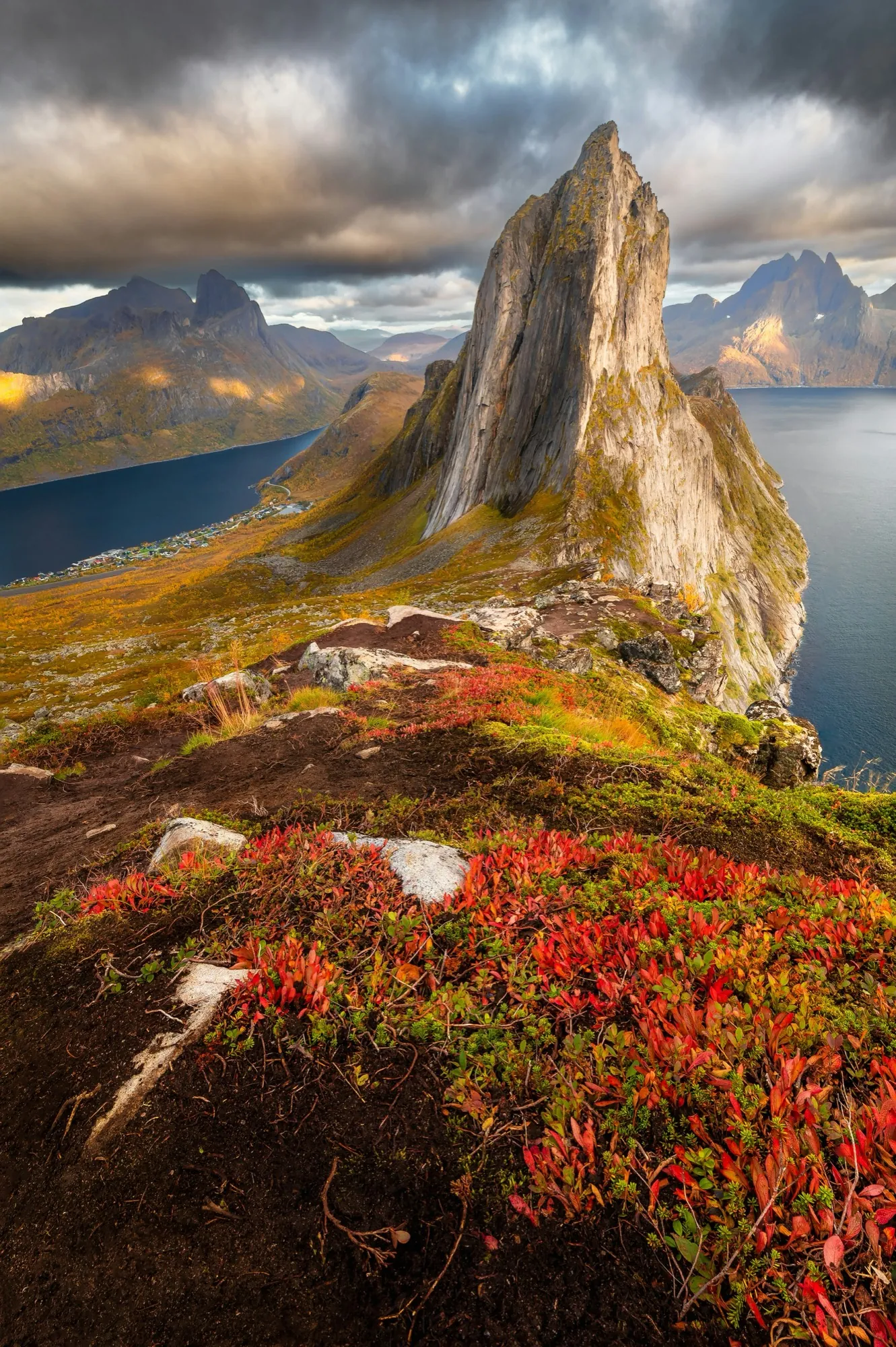
Senja is different. Not because it lacks the scenery — it has plenty, and some would argue it has more variety than Lofoten — but because almost nobody has found it yet. The road from Finnsnes onto the island still belongs mostly to locals. The fishing communities along the coast are still fishing communities, not souvenir shops. When you stand at the Bergsbotn viewpoint, or at Segla, or at the white-sand beaches on the south side of the island, you are not sharing it with a hundred other people who read the same article you did.
What Senja actually looks like
The island is large — Norway's second largest, in fact, behind only Spitsbergen in the mainland count. It takes an hour to drive across, longer if you stop, which you will. The western coastline is the dramatic side: fjords that slice deep into the mountains, cliff faces that drop almost vertically into the sea, peaks with names like Segla and Hesten that look like something from a film set. The eastern side is gentler, the farming land of Troms county flattening out toward the sound that separates Senja from the mainland.
Then there are the beaches. This is the thing people find hardest to believe before they come: Senja has white-sand beaches. Proper ones, long and clean, with turquoise water behind them and mountain peaks as the backdrop. They have almost no one on them, even in July, because the people who know about Senja are not yet numerous enough to fill them.
Why quieter is better
The practical argument is obvious: no queues, no competition for parking, no tour groups blocking the view. But there is something more than that. When a place is not performing for tourists, it behaves differently. The fishermen along the Senja coast are not fishermen-for-show. The boats in the harbour are working boats. The people in the cafés are from the island. The experience you have is not a curated version of northern Norway — it is northern Norway.
This matters more than it might sound. Tourism has a way of flattening places, of turning them into versions of what visitors expect to find. The rorbu cabins in Lofoten that were once cramped, cold working accommodation for seasonal fishermen are now luxury holiday lets with underfloor heating and a coffee machine. There is nothing wrong with that — they are very comfortable — but something has been exchanged in the transaction. Senja has not made that exchange yet.
How to get here
Finnsnes is the main town on the mainland side of the Gisund Bridge, the crossing point onto Senja. It is about two hours by car from Tromsø airport, or reachable by bus if you prefer not to drive. The drive itself is part of the experience — the E8 south from Tromsø through Troms county is not nothing.
Most visitors to this part of Norway fly into Tromsø and spend their time there. Tromsø is a good city. It has museums, restaurants, a cable car, and an entire industry built around selling you the northern lights and the midnight sun. It also has, in the busy seasons, the particular energy of a place that has been discovered. Two hours south, Senja is waiting for the people who want something else.
We run private boat tours from Finnsnes into the Senja fjord — fjord cruises, fishing trips, and midnight sun voyages. All private, all from a place most visitors have never heard of.
See our tours