The white-tailed eagle is the largest bird of prey in northern Europe, and on this stretch of coast you will almost certainly see one. What is harder to convey, until you are sitting underneath it, is how little it resembles the idea of an eagle you arrived with.
People expect drama. They expect the bird from the documentary — the stoop, the talons, the fish ripped from the water in a burst of spray. That happens, occasionally, and it is genuinely astonishing when it does. But it is not what the eagles spend their time doing, and it is not the reason this coast is one of the best places in the world to watch them. The reason is quieter, and in some ways more interesting.
The bird itself
The white-tailed eagle — havørn in Norwegian, "sea eagle" in plain English — is a genuinely large animal. The wingspan reaches around two and a half metres, wider than most people are tall, and from below the wings look less like a bird's and more like a section of barn door that has decided to fly. The old British nickname was "the flying barn door," and the first time one passes low over the boat you understand exactly where that came from.
Adults have a pale head, a heavy yellow bill, and the short white wedge of tail that gives the species its name. Younger birds are darker and more mottled, and take five years or so to reach the full adult plumage. Once you have seen a few, you stop mistaking them for anything else. Nothing else on this coast flies with that much unhurried mass.
Why there are so many here
Across most of Europe, the white-tailed eagle was hunted, poisoned and persecuted close to extinction. It disappeared entirely from country after country through the nineteenth and twentieth centuries. The coast of northern Norway was one of the places it held on — remote enough, and rich enough in fish and seabirds, that a real population survived. The species has been protected here since the late 1960s, and the numbers have climbed steadily ever since.
Today Norway holds one of the largest populations of white-tailed eagles on earth, and the coast of Troms and Nordland — the water you are looking at — is the dense heart of it. When the eagle was reintroduced to Scotland in the 1970s, after being shot out of Britain entirely, the birds used to do it were taken from this coast. The eagles you watch from the boat are, in a real sense, the source stock for the species' recovery across the North Atlantic.
This is why a sea eagle here is not a rare sighting to be hunted for. It is a resident. They are part of the working landscape of the fjord, as ordinary to the people who live here as the gulls — which does nothing to make them less impressive when one lifts off a crag a hundred metres away.
What they are actually doing
Mostly, they are waiting. An eagle's day is built around economy of effort: a bird that size cannot afford to burn energy chasing things it might not catch. So it sits. It picks a high perch — a dead tree, a rock shoulder, a snag on the treeline — and it watches the water with an attention that is easy to feel from below. Much of what they eat is fish taken from the surface in a single low pass, and a good deal of the rest is whatever the sea has already killed and floated up. They are patient, opportunistic, and entirely unbothered by being looked at.
When they do move, the economy is the point. The takeoff is heavy, almost laboured. Then they find air — a thermal off a sun-warmed slope, an updraught where wind meets a ridge — and the whole character of the bird changes. The wingbeats stop. They hang, and turn, and climb without apparent effort, and you realise the slowness on the perch was never sluggishness. It was a bird storing everything for the moment it needs the air.
How to actually see one
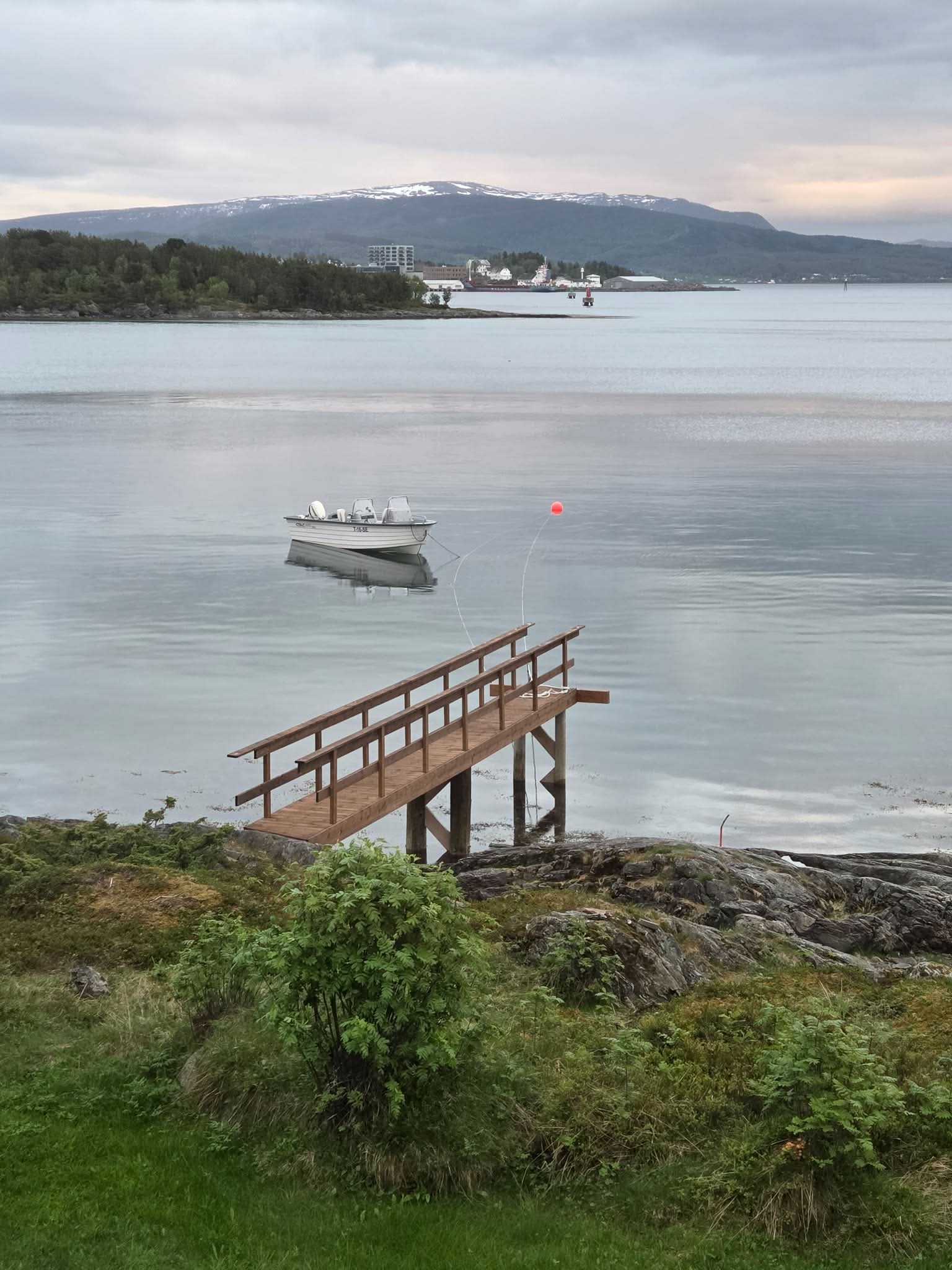
The single biggest factor is the boat. From a large vessel with an engine running and forty people talking, you see eagles at a distance, as silhouettes. From a small boat you can do the thing that actually works: cut the engine, drift, and let the fjord go quiet. Eagles tolerate a slow, predictable approach far better than a loud one. Sit still long enough near an occupied perch and the bird simply carries on with its day a short distance away, which is the only way you ever really see what it is doing.
The fishing helps, too. On a fishing trip the eagles are not incidental — they are paying attention to the same water you are, and a bird will often come in close when there is activity at the surface. Plenty of our best eagle encounters have happened not because we went looking for them, but because we stopped, and waited, and the eagle did the same thing a little further along the shore.
That is the version worth coming for. Not the documentary stoop, though it may happen. The ordinary one: a very large, very old kind of bird, going about its business on a quiet fjord, close enough that you can hear the wind come off its wings.
Our Eagles & Lines trip combines fishing on the sheltered inner fjord with time spent watching the coast's sea eagles — engine off, no crowd, on a small boat that can get close without disturbing them.
See the Eagles & Lines tour